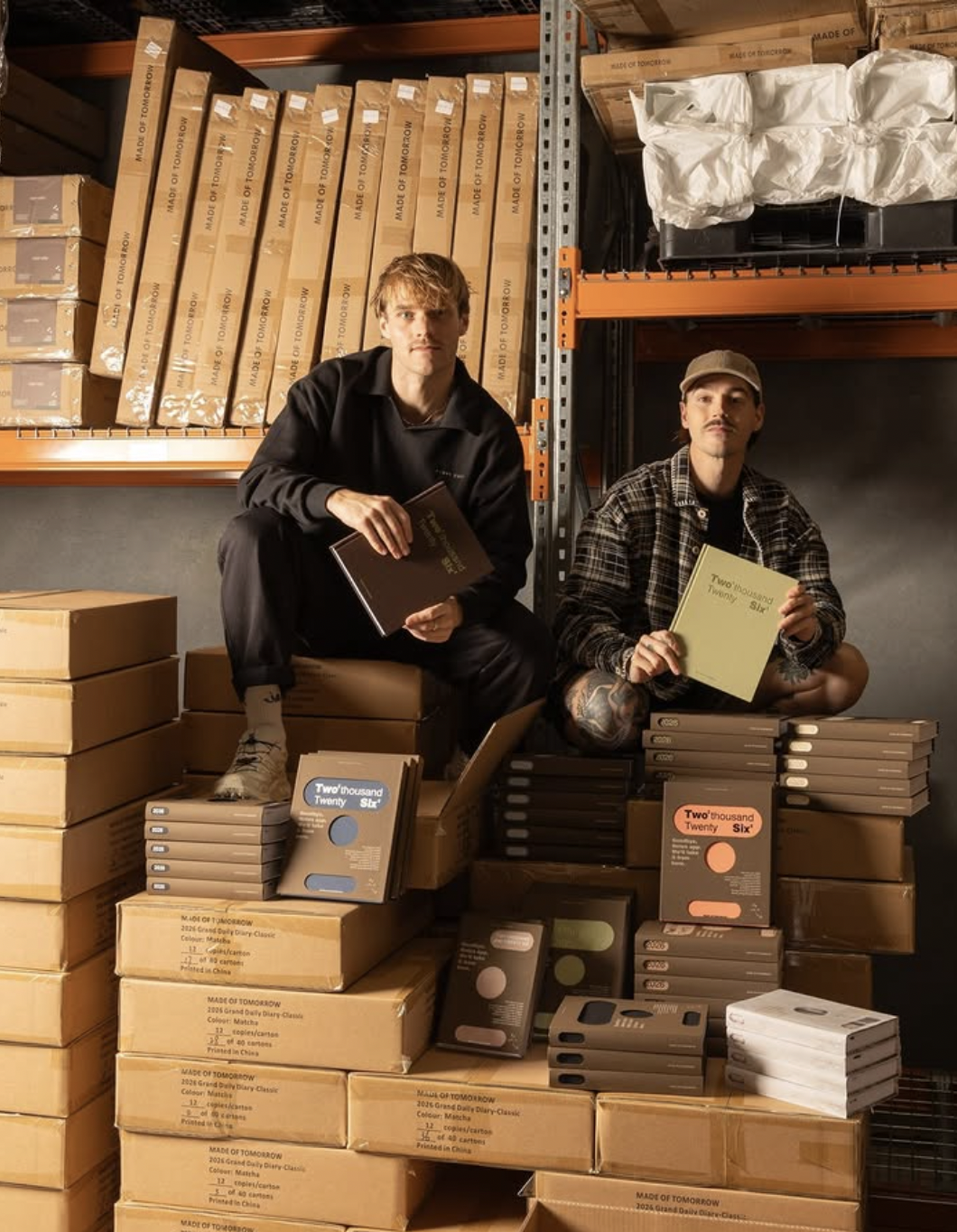
Simple. Functional. Sustainable. Made of Tomorrow is one of those few homeware brands that can turn a paper towel dispenser into a design work of art.
Founded by product designers Matt and Dan in 2015, this New Zealand-based studio is known for its eco-conscious, in-house design that blends retro curves with Scandinavian minimalism.
In this article, we will explore four strategies that Made of Tomorrow used to elevate product designs into luxury items that people are lining up to buy.
1. Packaging an Experience
Made of Tomorrow knows how to package its products as catalysts for sensory experiences. A full-length mirror isn’t just an object for reflection. It’s an understated piece of elegance that adds light, depth, and a sense of calm to the bedroom. A hobby journal isn’t simply a tool for organisation. It’s an analogue solution to save your brilliant ideas from a distracting notes app.
For Made of Tomorrow, design is never purely decorative. It serves a purpose, facilitates an experience, evokes a feeling. People aren’t just looking for objects. They are buying a feeling, mood, or lifestyle as much as the object itself.


2. Slow And Steady Win The Race
Made of Tomorrow proudly embraces its New Zealand roots. Rather than outsourcing, the brand opts for slower, sustainable production, in-house design, and carefully crafted goods.
“We design, refine, and stand behind everything we make. You’re supporting local creatives who care about every detail,” the studio noted. “From concept to content to customer support, the brand experience is built here, not outsourced.”
It’s a telling example that quality, longevity, and authentic connection are key factors to a flourishing creative business in the long run. In a globalised market, some go for scale, while Made of Tomorrow leverages its locality into part of its appeal.


3. Building Around a Strong Philosophy
A major reason why Made of Tomorrow’s design feels distinctive is that the brand is built on more than aesthetics alone. Beneath the visuals is a clear philosophy centred around sustainability, durability, craftsmanship, and practicality.
“We don’t manufacture at massive global scale,” the brand stated. “Smaller production runs mean tighter quality control.”
“Instead of optimising for volume and margin, we optimise for precision, performance, and products and feel considered.”
Whether it’s a stationery product, a bathroom item, or a bedroom furniture piece, each design reflects the core ethos. That consistency creates trust, authority and visibility.
For aspiring creatives, this is a lesson on the importance of coherence. It’s also a lesson on investing in the visuals, messaging, and values that feel uniquely you. A strong philosophy adds depth and emotional resonance to creative work.

4. Transparency and Intentional Pricing
Made of Tomorrow comes clear with its pricing and quality. Rather than expecting customers to hopefully one day understand its value, the brand directly draws attention to the materials, the build, and the thinking behind a product.
“Aluminium pricing fluctuates globally, and in New Zealand it often sits between $4,500-$7,000 per tonne before it’s even made into a finished piece. We build with aluminium because it lasts, not because it’s cheap, and we won’t substitute it when costs shift,” the brand said in an Instagram post.
“Aluminium doesn’t need sealing, oiling or special care. It won’t absorb moisture, stain easily, or deteriorate with cleaning.”
Transparency doesn’t make a brand pull every customer, but attract the right ones.
Contact
Websites: https://www.madeoftomorrow.co.nz/
Photos: Made of Tomorrow
Words by: Nina Nguyen


You must be logged in to post a comment.